


Graphite Petroleum Coke
Your Professional Graphite Petroleum Coke Supplier
Hebei Hangba International Trade Co., Ltd. has thrived in the coke industry for over 11 years. Our extensive export experience makes us a reliable global partner, with a strong reputation built on expertise and long - term commitment.We offer a wide range of high - quality products, including metallurgical coke, foundry coke, semi - coke, graphite petroleum coke, calcined petroleum coke, and calcined anthracite coal. These products are essential for industries where energy matters and cost - effectiveness is key.



Why choose us
Quality Assurance
Quality is our top priority. Every production step is strictly controlled to meet international standards. To further assure our clients of the superior quality of our products, we support third - party inspection.
Quality Service
We support port inspections. Our team is available 24/7, 7 days a week for any inquiries or assistance.
Our Market
Our Market include Indonesia, Malaysia, India, Pakistan, Japan, Vietnam, also North America, etc.
Customized Services
Arrange production according to the customer's product specifications. Customizable granularity and packaging.
Semi Graphite Petroleum Coke
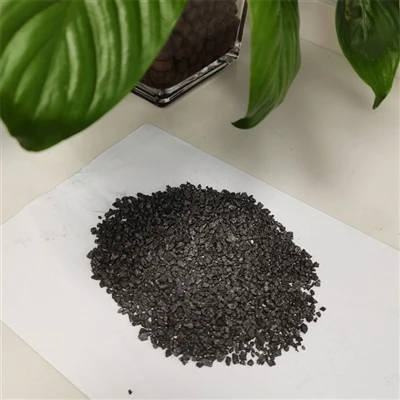
Graphite petroleum coke (GPC) is also known as graphitized petroleum coke. It is an important carbon material and a by-product in petroleum processing. After a specific process, it forms a material with unique properties. It often presents a block or granular form, the color is mostly silver gray or black, with a high carbon content and a certain degree of graphitization.
|
Component |
Typical Value |
|
Fixed Carbon (FC) |
98.5% – 99.9% |
|
Sulfur (S) |
≤ 0.05% |
|
Ash |
≤ 0.2% |
|
Moisture |
≤ 0.5% |
|
Volatile Matter |
≤ 0.5% |
|
Nitrogen (optional) |
≤ 0.1% |
Properties and Characteristics of Graphite Petroleum Coke
High Carbon Content
Graphite petroleum coke typically exhibits a high carbon content ranging from 98% to 99.5%. This high purity makes it an ideal material for applications where precise carbon content is crucial for optimal performance.
Excellent Conductivity
GPC boasts excellent thermal and electrical conductivity, making it an indispensable component in the production of electrodes for electric arc furnaces and lithium-ion batteries.
Low Impurity Levels
Graphite petroleum coke possesses low impurity levels, ensuring consistent and reliable performance in various industrial processes.

Advantages of Graphite Petroleum Coke
High electrical conductivity
It has high electrical conductivity, can conduct current effectively, and performs well in some application scenarios that require good electrical conductivity.
Good thermal stability
It also has good thermal stability, can maintain the relative stability of the structure in the high temperature environment, is not easy to deformation or decomposition, can withstand a large temperature range, from normal temperature to higher temperature range can be used normally.
Chemical stability
The chemical stability of graphite petroleum coke is also relatively excellent, which can resist the erosion of a variety of chemical substances, and can still exist stably in some corrosive media environment
Good density
In addition, its density is relatively moderate, which ensures a certain quality and strength, without being too heavy, and is convenient for processing and application in different industrial equipment and processes.

Calcined Graphite Petroleum Coke: This type has undergone a calcination process, enhancing its electrical conductivity and thermal stability.
Green Petroleum Coke: This uncalcined material is rich in sulfur and volatile content, used in specific applications where lower quality is acceptable.
Low Sulfur/High Carbon Petroleum Coke: Particularly used in high-end steel production, this grade minimizes sulfur contamination, ensuring higher quality steel output.
High-Temperature Graphite Petroleum Coke: Designed for applications requiring extreme thermal resistance, this grade excels in situations demanding high durability.
Application of graphite petroleum coke
Iron and steel metallurgy industry
It can improve the carbon content in steel-melting and casting. Also it can increase the quantity of scrap steel and reduce the quantity of pig iron. With good electrical conductivity, efficient conversion of electrical energy into heat energy, promote the steel smelting process.
Aluminum electrolysis industry
Anode material for making electrolytic cells.Stable conduction current during electrolysis, maintaining good performance in high temperature, highly corrosive electrolyte environment.
Chemical Industry
Manufacture of high temperature and corrosion resistant reaction vessel lining materials. Such as the manufacture of calcium carbide, silicon carbide, etc.. Effectively protect the container body from chemical reaction erosion.
High-end refractory field
It can improve the performance of refractory materials, extend the service life, and ensure the safe and stable operation of high-temperature industrial production.
Production process of Graphite Petroleum Coke
First of all, the raw materials of petroleum coke should be screened and pretreated to remove impurities and large particle inhomogeneity. This step is essential to ensure the quality stability of subsequent products. Usually a combination of mechanical screening and physical cleaning is used to separate the impurities that do not meet the requirements, so that the raw material can reach a certain purity and particle size standards.
The pre-treated petroleum coke raw material is sent to the high-temperature calcining furnace for calcining. The calcination temperature is generally between 1200°C and 1500°C, and in this process, a large amount of volatile matter in petroleum coke is removed, while its structure changes and gradually changes to the graphitized structure. High temperature calcination can further increase the density and strength of petroleum coke, improve its electrical conductivity and thermal stability.
The calcined petroleum coke also needs to be graphitized. This step is carried out in a graphitization furnace at a higher temperature, which can reach 2500°C – 3000°C. In such a high temperature environment, the carbon-carbon bonds in petroleum coke are further rearranged and optimized to form a more structured graphite crystal structure, which significantly improves its graphitization degree, thereby significantly improving its key properties such as electrical conductivity and thermal stability, so that it can meet the stringent requirements of high-end industrial applications.