


Foundry Coke
Your Professional Foundry Coke Supplier
Hebei Hangba International Trade Co., Ltd. has thrived in the coke industry for over 11 years. Our extensive export experience makes us a reliable global partner, with a strong reputation built on expertise and long - term commitment.We offer a wide range of high - quality products, including metallurgical coke, foundry coke, semi - coke, graphite petroleum coke, calcined petroleum coke, and calcined anthracite coal. These products are essential for industries where energy matters and cost - effectiveness is key.



Why choose us
Quality Assurance
Quality is our top priority. Every production step is strictly controlled to meet international standards. To further assure our clients of the superior quality of our products, we support third - party inspection.
Quality Service
We support port inspections. Our team is available 24/7, 7 days a week for any inquiries or assistance.
Our Market
Our Market include Indonesia, Malaysia, India, Pakistan, Japan, Vietnam, also North America, etc.
Customized Services
Arrange production according to the customer's product specifications. Customizable granularity and packaging.

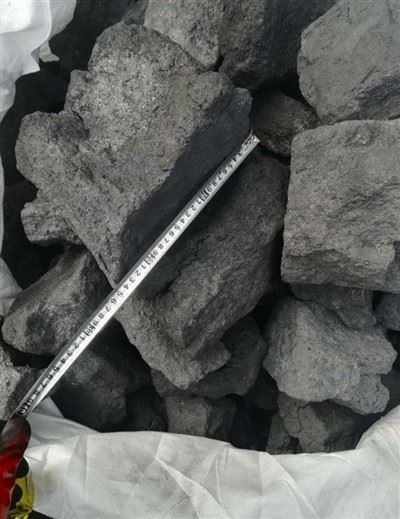
Foundry Coke
Foundry coke is a high-quality type of coke produced from special coal blends by carbonization. Is produced by heating coal in the absence of air at high temperature (1100–1400 °C) in a coke oven. This process removes volatile compounds to produce a dense, porous material rich in carbon and with a high thermal conductivity.
|
Model No. |
Fixed Carbon(Min) |
Ash(Max) |
Volatile matter(Max) |
Sulfur(Max) |
Moisture (Max) |
Size |
|
HB-FC-01 |
90% |
8% |
1.5% |
0.6% |
5% |
60-80mm, 80-120mm, 90-150mm, 120-250mmetc |
|
HB-FC-02 |
88% |
10% |
1.5% |
0.6% |
8% |
|
|
HB-FC-03 |
86% |
12% |
1.5% |
0.6% |
8% |
|
|
HB-MT |
85% |
13.5% |
1.5% |
0.8% |
8% |
Benefits of Foundry Coke
Metal Melting
Provide sufficient heat for melting and refining upon metal pieces.
01
Low impurity content
Cut undesirable materials such as sulfur and ash to improve the quality of metal products.
02
Structural Integrity
Retain the integrity of the furnace and function over the duration of long runs.
03
Consistent Operation
Provide the same outcome every time — a must-have in industrial outputs.
04
Versatility
Can be used for ferrous and non-ferrous metal casting.
05
Types of Foundry Coke

01
Metallurgical Coke
This is the primary type used in iron and steel production. It offers high carbon content and is derived from high-quality coal, leading to a higher price due to the intensive production process.

02
High-Sulfur Coke
Typically less expensive than metallurgical coke, high-sulfur coke has lower carbon quality and is often used for applications where sulfur content is less critical.

03
Petroleum Coke
Often a cheaper alternative, petroleum coke can substitute foundry coke in some applications. It’s derived from the oil refining process and its price can be influenced by crude oil prices.

04
Anthracite Coke
Known for its high carbon and low volatile content, anthracite coke offers superior performance but comes with a higher price tag. It is used in specialized applications requiring optimal purity levels.
Metal Casting
Foundry coke serves as a fuel and reducing agent in metal casting. It serves as a heat source for the melting of metals such as iron and copper for casting.
Iron and Steel Production
Foundry coke serves as a carbon source and structural support in iron and steel production. This process improves the overall quality of final metal products by ensuring proper air and heat distribution throughout the blast furnace.
Cupola Furnaces
Foundry coke is required by cupola furnaces to generate constant heat. Its robust structure enables it to hold extreme temperatures for hours, necessary to produce cast iron.
Carbon Raiser in Smelting
In smelting, very often carbon raiser is foundry coke. Adding it to molten metal makes it harder and higher quality.
Non-Ferrous Metal Casting
When producing non-ferrous metals such as copper, aluminum, and brass, foundry coke can be used. Its stable heat output and purity make casting easier.
Carbon Additive in Foundries
When you require that the carbon content of molten iron be altered, foundry coke serves as an ideal carbon additive. The process allows you to develop the proper hardness and strength in the finished good.
Fuel for Industrial Boilers
Coke foundry, a good spear fuel for industrial boiler It is efficient in long-duration heating due to its high carbon content and low impurities.
Considerations for Selecting Foundry Coke
Coke Size
How well they work depends on the size of the coke pieces you choose. Oversized chunks yield superior structural support, whereas smaller sizes are better for heat efficiency. The decision you make on which size to choose should be informed by your individual application and what result you are looking for.
Ash Content
Do you know how ash content influences the efficiency and cleanliness of your production process? Higher quality coal results in less ash and slag when the metal is produced leading to improved purity of the metal with reduced waste. Always go for coke with low ash content.
Sulfur Content
This can be detrimental to your metal products, mainly in high-grade steel production. Sulfur content – The use of foundry coke with low sulfur content ensures the final metal quality and performance.

Foundry coke is made from low-volatile coal, which is coal that has a low tendency to release volatile compounds when heated. The most commonly used coals for foundry coke production are bituminous coals, which are known for their high carbon content and low ash and sulfur content. These coals are carefully selected and blended to ensure that the resulting coke has the desired properties for use in the foundry. The coal is first crushed and then mixed with a binding agent, such as tar or pitch, to form a paste. This paste is then fed into the coke ovens, where it is heated to high temperatures in the absence of air. The heat causes the volatile compounds in the coal to be released, leaving behind a solid carbonaceous material known as coke. The coke is then cooled and crushed to the desired size before being used in the foundry.
Production of foundry coke
Foundry coke is produced in coke ovens, which are large, sealed chambers where coal is heated in the absence of air. The production process begins with the selection and blending of the appropriate coals, which are then crushed and mixed with a binding agent. The resulting paste is then fed into the coke ovens, which are lined with refractory bricks to withstand the high temperatures generated during the coking process. The coal is heated to temperatures between 1000 and 1300 degrees Celsius, which causes the volatile compounds to be released and the carbon content of the coal to increase. The coking process typically takes between 12 and 24 hours, after which the coke is cooled using water or air. The cooled coke is then crushed and sized according to the specific requirements of the foundry, and is ready for use in the production of iron and steel.