

Semi Graphite Petroleum Coke (SGPC) holds a significant position in numerous industrial applications, ranging from steel production to aluminum smelting. As a trusted SGPC supplier, we understand the critical importance of quality control during the production process to ensure the consistent delivery of high - grade products. In this blog post, we will delve into the comprehensive quality control measures implemented during the production of Semi Graphite Petroleum Coke.
Raw Material Selection
The journey to producing top - notch SGPC begins with the careful selection of raw materials. Petroleum coke, the primary feedstock, is sourced from reliable refineries. We set strict criteria for the properties of the raw petroleum coke, such as its carbon content, sulfur content, and volatile matter.
Carbon content is a crucial factor as it directly impacts the final performance of SGPC. Higher carbon content generally means a more efficient and effective product in industrial applications. For example, in steel production, a higher carbon SGPC can contribute to better carbonization and a more consistent steel quality. Meanwhile, we closely monitor the sulfur content. Excessive sulfur can lead to environmental pollution during the application of SGPC and may also have a negative impact on the quality of the end - product. We ensure that the sulfur content of the raw petroleum coke is well within the acceptable range for our target applications.
Volatile matter is another parameter that needs careful consideration. A low level of volatile matter indicates a more stable and pure material, which is essential for reliable performance in industrial processes. By thoroughly analyzing and selecting the raw petroleum coke based on these criteria, we lay a solid foundation for the subsequent production process.
Pre - treatment Processes
Once the raw petroleum coke is received, it undergoes pre - treatment processes. One of the key pre - treatment steps is crushing and screening. The large - sized petroleum coke is crushed into smaller, more uniform particles. This not only facilitates subsequent processing steps but also ensures a more consistent distribution of properties within the material.
The screening process helps to separate the crushed particles into different size fractions. This is important because specific industrial applications often have precise requirements for particle size. For instance, in some applications, finer particles may be preferred to enhance reaction rates, while in others, coarser particles may be more suitable for mechanical stability.
During pre - treatment, we also conduct further quality checks on the crushed and screened material. We use advanced analytical techniques such as X - ray fluorescence (XRF) to determine the elemental composition of the material. This helps us to confirm that the pre - treated material still meets our quality standards and to make necessary adjustments if any deviations are detected.
Calcination Process Control
The calcination process is a pivotal stage in the production of SGPC. Calcination involves heating the pre - treated petroleum coke to high temperatures in a controlled environment. The calcination process typically occurs in rotary kilns or shaft kilns.
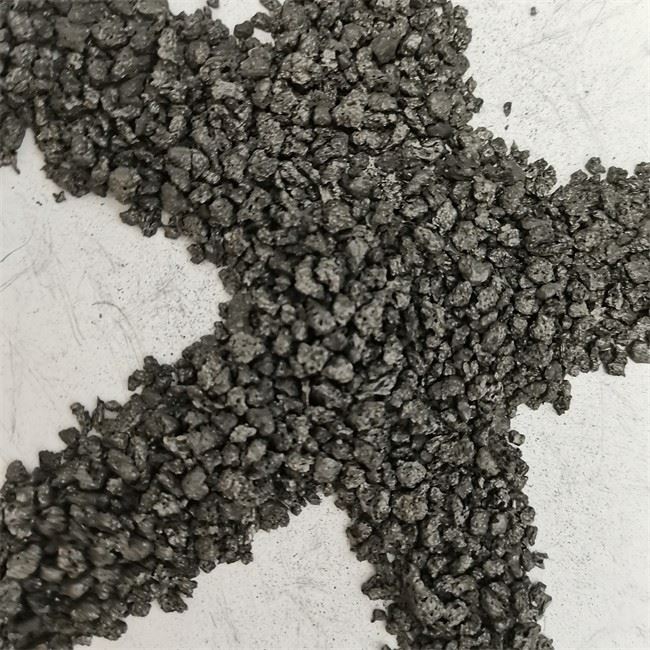

We maintain strict control over the temperature, time, and atmosphere during the calcination process. Temperature is a critical factor as it directly influences the degree of graphitization. Higher temperatures can promote the transformation of the petroleum coke structure towards a more graphite - like structure, which enhances the electrical and thermal conductivity of the SGPC. However, if the temperature is too high, it may lead to excessive energy consumption and potential damage to the product. Therefore, we precisely control the temperature within a specific range, based on the desired properties of the final SGPC.
The duration of the calcination process also plays an important role. Sufficient time is required for the complete removal of volatile matter and the achievement of the desired structural changes. We monitor the time carefully to ensure that the calcination process is neither too short nor too long.
The atmosphere in the calcination kiln is also carefully regulated. Usually, an inert atmosphere such as nitrogen is used to prevent oxidation of the petroleum coke. Oxidation can reduce the carbon content of the product and degrade its quality. By maintaining a proper atmosphere, we safeguard the integrity of the SGPC during the calcination process.
Quality Testing and Monitoring
Regular and comprehensive quality testing is an integral part of our production process. We have a well - equipped in - house laboratory with state - of - the - art testing equipment.
Chemical analysis is carried out to determine the exact composition of the SGPC. This includes measuring the carbon, sulfur, hydrogen, and other elemental contents. For example, we use the LECO analyzer for accurate determination of carbon, sulfur, and nitrogen contents. This information helps us to ensure that the SGPC meets the chemical specifications required by our customers.
Physical property testing is also crucial. We measure parameters such as bulk density, true density, and particle size distribution. These properties can affect the handling, transportation, and application of the SGPC. For instance, a proper bulk density ensures that the SGPC can be easily stored and transported in industrial settings. Particle size distribution is important for its blending ability with other materials in the production process.
We also conduct performance testing to evaluate the behavior of the SGPC in real - world applications. This may involve testing its reactivity in steel - making processes or its electrical conductivity in battery applications. By simulating the actual working conditions, we can accurately assess the quality and performance of the SGPC.
Post - production Inspection and Packaging
After the calcination and quality testing processes, the SGPC undergoes a final inspection before packaging. Trained quality control personnel visually inspect the product for any visible defects, such as impurities or abnormal particles. This manual inspection provides an additional layer of quality assurance.
Once the product is confirmed to meet all the quality standards, it is carefully packaged. We use high - quality packaging materials that can protect the SGPC from damage, moisture, and contamination during transportation and storage. The packaging is also clearly labeled with important information such as the product name, grade, batch number, and quality specifications. This ensures traceability and easy identification for our customers.
Our Product Range
As an SGPC supplier, we offer a wide range of high - quality products to meet the diverse needs of our customers. Our product portfolio includes High - Performance GPC Carbon Additive For Industrial Manufacturing Solutions, which is designed to enhance the performance of various industrial manufacturing processes. The Graphite Carbon Powder 95% is another popular product, known for its high carbon content and excellent purity.
We also provide High - Quality GPC For Advanced Steel Production And Casting, which is specifically tailored to the requirements of the steel industry. The Graphite Instant Columnar Recarburizer is a unique product that offers rapid and efficient carbon addition in industrial processes. And our High Carbon Graphitized Petroleum Coke For Steel Casting is highly sought after in the steel casting industry for its superior performance.
Invitation to Contact for Procurement
We take pride in our strict quality control measures and the high - quality SGPC products we offer. If you are in the market for Semi Graphite Petroleum Coke for your industrial applications, we invite you to contact us for procurement discussions. Our team of experts is ready to provide you with detailed product information, technical support, and competitive pricing. We are committed to meeting your specific needs and ensuring your satisfaction with our products.
References
- ASTM International. (Year). Standard test methods for carbon and graphite. ASTM.
- Smith, J. D., & Johnson, A. B. (Year). Petroleum coke: Production, properties, and applications. Energy Publications.
- Industrial Minerals Association - North America. (Year). Guide to high - purity carbon materials. IMA - NA.


