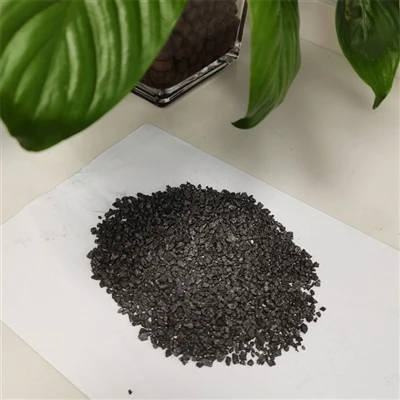
As a supplier of calcined petroleum coke, I often get asked about the sources of raw materials for this valuable product. Calcined petroleum coke, or Calcined Petcoke, is a crucial material in various industries, including aluminum, steel, and titanium dioxide production. Understanding its raw material sources is essential for both producers and consumers to ensure a stable supply chain and high - quality products.
Crude Oil: The Primary Source
The main raw material for calcined petroleum coke is raw petroleum coke, which is a by - product of the oil refining process. Crude oil contains a complex mixture of hydrocarbons, and during the refining process, different fractions are separated based on their boiling points. One of the residual products from the refining of heavy crude oils is petroleum coke.
Heavy crude oils, such as those found in the Middle East, Venezuela, and Canada, are particularly rich in carbon and impurities. When these heavy crude oils are processed in refineries, they go through a series of distillation and cracking processes. The vacuum distillation unit in a refinery separates the heavy residues from the lighter fractions. These heavy residues are then further processed in a coker unit, where they are heated to high temperatures (around 480 - 500°C) in the absence of oxygen. This process, known as coking, converts the heavy residues into petroleum coke.
There are two main types of coking processes: delayed coking and fluid coking. Delayed coking is the most common method for producing raw petroleum coke. In delayed coking, the heavy residues are heated in a furnace and then transferred to large coking drums. Inside the drums, the material undergoes thermal decomposition, and solid petroleum coke forms over time. The coke is then removed from the drums, typically using hydraulic cutting methods.
Fluid coking, on the other hand, is a continuous process where the heavy residues are injected into a fluidized bed of hot coke particles. The high - temperature environment in the fluidized bed causes the residues to crack and form coke, which is then continuously removed from the system.


Quality Variations Based on Crude Oil Sources
The quality of raw petroleum coke can vary significantly depending on the source of the crude oil. Crude oils from different regions have different chemical compositions, which in turn affect the properties of the resulting petroleum coke.
For example, Middle Eastern crude oils generally produce petroleum coke with relatively low sulfur and metal content. This type of coke is highly desirable for applications where high - purity calcined petroleum coke is required, such as in the production of graphite electrodes for the steel industry.
Venezuelan crude oils, on the other hand, tend to have higher sulfur and metal contents. The resulting petroleum coke from Venezuelan crude requires more extensive processing during the calcination stage to reduce the sulfur and metal levels to acceptable limits. However, with proper treatment, this coke can still be used in applications where slightly higher impurity levels are tolerable, such as in the production of anodes for the aluminum industry.
Canadian crude oils, especially those from the oil sands, also produce petroleum coke with unique characteristics. The coke from oil sands has a high carbon content but may also contain relatively high levels of asphaltenes and other impurities. The processing of this type of coke requires specialized techniques to ensure that the final calcined product meets the quality standards of the end - use industries.
Impact of Refinery Operations on Raw Material Quality
In addition to the source of the crude oil, refinery operations also play a crucial role in determining the quality of raw petroleum coke. The operating conditions in the coker unit, such as temperature, pressure, and residence time, can have a significant impact on the physical and chemical properties of the coke.
Higher coking temperatures generally result in a more porous and less dense coke. This type of coke may have a higher reactivity, which can be beneficial in some applications but may also require more careful handling during the calcination process. On the other hand, lower coking temperatures can produce a denser and less porous coke, which may have lower reactivity but better mechanical properties.
The quality of the feedstock entering the coker unit is also important. Refineries often blend different types of heavy residues to optimize the properties of the resulting petroleum coke. By carefully selecting and blending the feedstocks, refineries can produce raw petroleum coke that meets the specific requirements of the calcined petroleum coke producers.
Global Supply of Raw Petroleum Coke
The global supply of raw petroleum coke is closely linked to the production of crude oil and the refining capacity of different countries. The Middle East is one of the largest producers of raw petroleum coke, thanks to its vast reserves of heavy crude oil and large - scale refinery operations. Saudi Arabia, the United Arab Emirates, and Kuwait are among the major exporters of raw petroleum coke.
North America also has a significant share of the global raw petroleum coke supply. The United States, with its large refining industry, is a major producer and exporter of raw petroleum coke. Canadian oil sands operations also contribute to the supply, although the coke from oil sands has some unique challenges in terms of processing and transportation.
Asia is another important region in the raw petroleum coke market. Countries like China and India have a growing demand for calcined petroleum coke, and they also have a significant refining capacity. In some cases, these countries import raw petroleum coke to meet the increasing demand for calcined products, while in other cases, they produce their own raw coke from domestic crude oil sources.
Challenges in the Supply Chain
Despite the relatively large global supply of raw petroleum coke, there are several challenges in the supply chain for calcined petroleum coke producers. One of the main challenges is the volatility of crude oil prices. Since raw petroleum coke is a by - product of the oil refining process, its price is closely linked to the price of crude oil. Fluctuations in crude oil prices can make it difficult for calcined petroleum coke producers to plan their production and pricing strategies.
Another challenge is the environmental regulations related to the production and use of petroleum coke. Raw petroleum coke contains sulfur, metals, and other impurities, and the calcination process can release pollutants into the environment if not properly controlled. As a result, producers need to invest in advanced pollution control technologies to meet the environmental standards, which can increase the production costs.
Transportation is also a significant challenge, especially for producers located far from the end - use markets. Raw petroleum coke is a bulky and heavy material, and transporting it over long distances can be expensive and logistically complex. This can limit the availability of certain types of raw petroleum coke in some regions and increase the overall cost of production for calcined petroleum coke.
Conclusion
As a supplier of calcined petroleum coke, I understand the importance of a stable and high - quality supply of raw materials. The sources of raw materials for calcined petroleum coke are diverse, with crude oil being the primary source. The quality of the raw petroleum coke depends on the source of the crude oil, the refinery operations, and the coking process used.
The global supply of raw petroleum coke is influenced by factors such as crude oil production, refining capacity, and regional demand. However, there are also challenges in the supply chain, including price volatility, environmental regulations, and transportation issues.
If you are in the market for high - quality calcined petroleum coke, I invite you to contact me for more information. We have a wide range of calcined petroleum coke products to meet the specific needs of different industries. Whether you are in the aluminum, steel, or other sectors, we can provide you with the right product at a competitive price. Let's start a conversation about your requirements and explore how we can work together to meet your business goals.
References
- "Petroleum Coke: Production, Properties, and Applications" - A comprehensive industry report on the production and use of petroleum coke.
- "Crude Oil Refining Processes" - A textbook that details the various processes involved in crude oil refining and the production of by - products like petroleum coke.
- Industry journals and publications on the calcined petroleum coke market, which provide up - to - date information on market trends, supply, and demand.