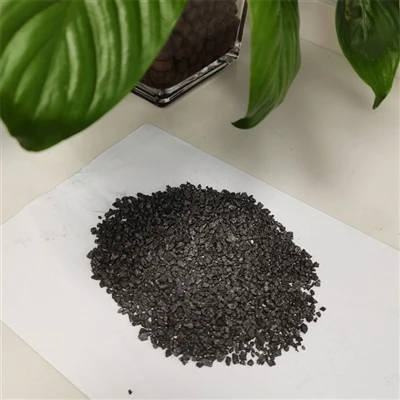
Hey there! As a supplier of carbon anode scrap, I often get asked about the difference between carbon anode scrap and normal carbon anodes. So, I thought I'd write this blog to clear up any confusion and give you a better understanding of these two products.
What are Normal Carbon Anodes?
First off, let's talk about normal carbon anodes. These are key components in the aluminum smelting process. They're made from a blend of petroleum coke and coal tar pitch. The petroleum coke is a high - carbon solid residue from oil refining, and the coal tar pitch acts as a binder.
Manufacturers go through a series of steps to make normal carbon anodes. The raw materials are first crushed and ground to the right particle size. Then they're mixed together at high temperatures to form a paste. This paste is then molded into the desired anode shape, usually large rectangular blocks. After that, the anodes are baked at extremely high temperatures in a kiln. This baking process is crucial as it gives the anodes their strength, electrical conductivity, and chemical stability.
In the aluminum smelting cell, normal carbon anodes play a vital role. They act as the positive electrode. When an electric current is passed through the molten electrolyte, the anodes react with the oxygen in the alumina (the raw material for aluminum production). This reaction releases carbon dioxide gas and allows the aluminum ions to be reduced and collected at the cathode. Normal carbon anodes are designed to have a long service life, high electrical conductivity, and good mechanical strength to withstand the harsh conditions inside the smelting cell.
What is Carbon Anode Scrap?
Now, let's move on to carbon anode scrap. Carbon anode scrap is basically what's left of the normal carbon anodes after they've been used in the aluminum smelting process. Once the anodes have reached the end of their useful life in the smelting cell, they are removed. These used anodes are then what we call carbon anode scrap.
There are a few reasons why anodes become scrap. Over time, the anodes gradually erode due to the chemical reactions taking place in the smelting cell. Also, some parts of the anode may get damaged or develop cracks during the smelting process. As a result, they can no longer perform their function effectively and are replaced with new anodes.
Carbon anode scrap comes in different sizes. We offer Size200 - 400 mm Carbon Anode Scrap and 100 - 500mm Carbon Anode Scrap. The size can vary depending on how the anodes were used and how they were broken down after removal from the smelting cell.


Key Differences
1. Physical Properties
- Appearance: Normal carbon anodes have a smooth and uniform surface when they're new. They're carefully manufactured to have a consistent shape and size. On the other hand, carbon anode scrap has a more irregular appearance. It may have signs of wear and tear, such as rough edges, cracks, and holes. The surface may also be covered with a layer of electrolyte or other impurities from the smelting process.
- Density: Normal carbon anodes are made to have a specific density to ensure proper electrical conductivity and mechanical strength. Carbon anode scrap, however, may have a slightly different density. This is because the erosion and chemical reactions during the smelting process can change the internal structure of the anode, leading to variations in density.
2. Chemical Composition
- Purity: Normal carbon anodes are made from high - quality raw materials and are processed to have a relatively high carbon content and low levels of impurities. Carbon anode scrap, on the other hand, contains more impurities. During the smelting process, the anodes come into contact with the electrolyte, which can leave behind elements like sodium, fluoride, and aluminum. These impurities can affect the chemical properties of the scrap.
- Reactivity: The chemical reactivity of carbon anode scrap is different from that of normal carbon anodes. Due to the presence of impurities and the changes in the carbon structure caused by the smelting process, carbon anode scrap may react differently in subsequent processes. For example, when used in other industrial applications, it may require different reaction conditions compared to normal carbon anodes.
3. Cost
- Production Cost: The production of normal carbon anodes involves a complex and energy - intensive manufacturing process. From the sourcing of high - quality raw materials to the baking at high temperatures, a lot of resources are invested. This makes the production cost of normal carbon anodes relatively high. In contrast, carbon anode scrap is a by - product of the aluminum smelting process. The main cost associated with it is the collection, sorting, and processing of the scrap. As a result, carbon anode scrap is generally more cost - effective.
4. Applications
- Primary Use: Normal carbon anodes are specifically designed for use in the aluminum smelting industry. Their properties are optimized to meet the requirements of the smelting process. Carbon anode scrap, however, has a wider range of applications. It can be used as a carbon source in other industries such as steelmaking, foundries, and the production of carbon - based refractories. In steelmaking, for example, carbon anode scrap can be added to the furnace to increase the carbon content of the steel.
Why Choose Carbon Anode Scrap from Us?
As a supplier of carbon anode scrap, we take pride in offering high - quality products. Our carbon anode scrap is carefully sorted and processed to ensure that it meets the needs of our customers. We have a wide range of sizes available, including Size200 - 400 mm Carbon Anode Scrap and 100 - 500mm Carbon Anode Scrap.
One of the main advantages of choosing our carbon anode scrap is the cost savings. Since it's a by - product, you can get a great carbon source at a lower price compared to normal carbon anodes. Also, by using our carbon anode scrap, you're contributing to a more sustainable and circular economy. Instead of sending the used anodes to waste, we're recycling them and giving them a new life in other industries.
If you're in the market for carbon anode scrap, whether you're in the steelmaking, foundry, or refractory industry, we'd love to hear from you. We can provide you with samples and detailed information about our products. Don't hesitate to reach out if you have any questions or if you're interested in starting a procurement discussion. We're here to help you find the best solution for your carbon - related needs.
References
- "Aluminum Smelting Technology: An Introduction to the Hall - Héroult Process" by Donald R. Sadoway.
- Various industry reports on carbon anodes and their applications in different industries.