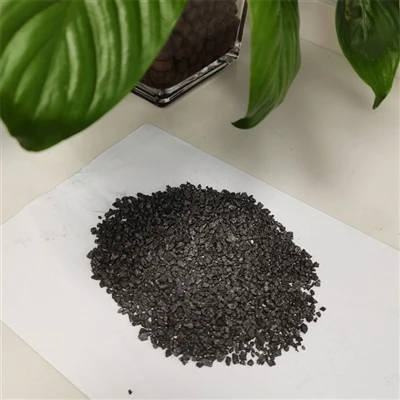
Graphite petroleum coke is a unique and versatile material that has found a range of applications in various industries, including the pharmaceutical sector. As a leading supplier of graphite petroleum coke, I am excited to explore the different uses of this remarkable substance in the pharmaceutical industry.
1. Role as a Catalyst Carrier
In the pharmaceutical manufacturing process, catalysts play a crucial role in accelerating chemical reactions. Graphite petroleum coke can serve as an excellent carrier for catalysts. Its high surface - area - to - volume ratio allows for a large amount of catalyst to be adsorbed on its surface. This property is essential as it provides more active sites for the catalytic reaction to take place, thereby increasing the reaction rate and efficiency.
For example, in the synthesis of certain antibiotics, catalysts supported on graphite petroleum coke can help in the selective conversion of raw materials into the desired pharmaceutical compounds. The porous structure of graphite petroleum coke ensures that the catalyst is well - dispersed, which is vital for maintaining the stability and activity of the catalyst over a long period of time. Our Graphite Carbon Powder 95% is an ideal choice for such applications due to its high purity and suitable pore structure.


2. Use in Drug Delivery Systems
The development of efficient drug delivery systems is a key area in pharmaceutical research. Graphite petroleum coke can be used in the formulation of novel drug delivery carriers. Its unique physicochemical properties, such as its ability to be functionalized and its biocompatibility, make it a promising candidate.
Nanoparticles made from graphite petroleum coke can be designed to encapsulate drugs. These nanoparticles can then be engineered to target specific cells or tissues in the body. For instance, by modifying the surface of the graphite petroleum coke nanoparticles with specific ligands, they can be directed to cancer cells. Once at the target site, the nanoparticles can release the drug in a controlled manner, improving the therapeutic efficacy and reducing side effects. Our Low Sulfur 0.05% Graphite Coke can be processed into high - quality nanoparticles for drug delivery applications, as the low sulfur content ensures better biocompatibility.
3. As an Adsorbent in Purification Processes
Purification is a critical step in pharmaceutical production to remove impurities and ensure the quality and safety of drugs. Graphite petroleum coke has excellent adsorption properties, which make it useful in the purification of pharmaceutical products.
It can adsorb various types of impurities, including heavy metals, organic compounds, and residual solvents. In the production of injectable drugs, for example, graphite petroleum coke can be used in the purification process to remove trace amounts of contaminants that could potentially cause adverse reactions in patients. The large surface area of graphite petroleum coke allows it to adsorb a significant amount of impurities, and its porous structure enables rapid mass transfer during the adsorption process. Our Graphite Instant Columnar Recarburizer can also be used in purification processes after appropriate modifications to enhance its adsorption capacity.
4. In the Production of Pharmaceutical Packaging Materials
The quality of pharmaceutical packaging materials is of utmost importance to maintain the stability and integrity of drugs. Graphite petroleum coke can be incorporated into the production of certain packaging materials.
When added to polymers used for packaging, graphite petroleum coke can improve the mechanical properties of the packaging, such as its strength and durability. It can also provide some degree of barrier properties against oxygen and moisture, which helps to protect the drugs from degradation. Additionally, graphite petroleum coke can impart antistatic properties to the packaging materials, reducing the risk of electrostatic discharge that could potentially damage the drugs.
5. In the Synthesis of Specialized Pharmaceutical Intermediates
Graphite petroleum coke can participate in the synthesis of specialized pharmaceutical intermediates. In some chemical reactions, it can act as a carbon source or a reducing agent.
For example, in the synthesis of some heterocyclic compounds that are important pharmaceutical intermediates, graphite petroleum coke can be used to provide the necessary carbon atoms for the formation of the ring structure. Its reducing properties can also be utilized to convert certain functional groups in the reaction, facilitating the synthesis of the desired intermediates.
Advantages of Our Graphite Petroleum Coke for the Pharmaceutical Industry
As a supplier, we ensure that our graphite petroleum coke products meet the high - quality standards required by the pharmaceutical industry. Our products are carefully processed to have consistent quality, with low levels of impurities such as sulfur, ash, and volatile matter.
We also offer a range of products with different particle sizes and surface properties to meet the specific needs of different pharmaceutical applications. Whether it is for catalyst carriers, drug delivery systems, or purification processes, our products can be customized to provide the best performance.
Contact Us for Procurement
If you are in the pharmaceutical industry and looking for high - quality graphite petroleum coke for your production processes, we would be delighted to have a discussion with you. Our team of experts can provide detailed information about our products, their applications, and how they can be tailored to your specific requirements. We are committed to providing excellent customer service and ensuring that you get the best value for your investment. Please feel free to reach out to us to start a procurement discussion.
References
- Smith, J. R. (2018). Advanced Materials in Pharmaceutical Manufacturing. Elsevier.
- Jones, A. M. (2019). Drug Delivery Systems: Principles and Applications. Springer.
- Brown, C. D. (2020). Catalysis in the Pharmaceutical Industry. Wiley.